The history of Islam1 / 1
632 to 870.
Muhammad died in 632. Al-Bukhari, compiler of the most trusted collection, died in 870.
The hadith era
The history of Islam1 / 1
Muhammad died in 632. Al-Bukhari, compiler of the most trusted collection, died in 870.
The hadith era
The history of Islam1 / 2
29Fight against such of those who have been given the Scripture as believe not in Allah nor the Last Day, and forbid not that which Allah hath forbidden by His messenger, and follow not the Religion of Truth, until they pay the tribute readily, being brought low.
Quran 9:29 (Pickthall) · context
How Islam spread
The history of Islam2 / 2
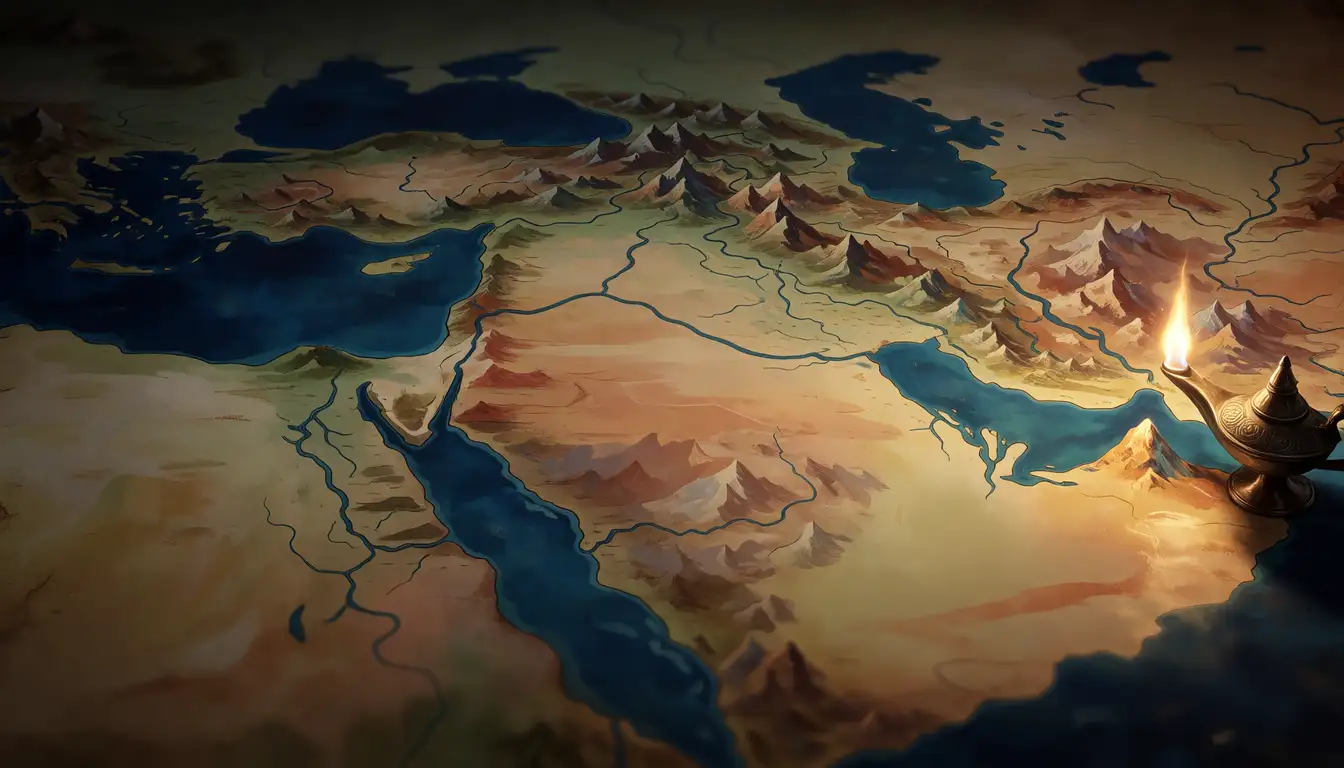
Yarmuk (636), Jerusalem (637/638), Egypt (641), Persia (Nahavand, 642), North Africa, Spain (711), Sindh (711-712).
How Islam spread
What Islam's sources say about violence and jihad1 / 4
39Sanction is given unto those who fight because they have been wronged; and Allah is indeed Able to give them victory;
Quran 22:39 (Pickthall) · context
What the Quran says about fighting
What Islam's sources say about violence and jihad2 / 4
5Then, when the sacred months have passed, slay the idolaters wherever ye find them, and take them (captive), and besiege them, and prepare for them each ambush. But if they repent and establish worship and pay the poor-due, then leave their way free. Lo! Allah is Forgiving, Merciful.
Quran 9:5 (Pickthall) · context
What the Quran says about fighting
What Islam's sources say about violence and jihad3 / 4
29Fight against such of those who have been given the Scripture as believe not in Allah nor the Last Day, and forbid not that which Allah hath forbidden by His messenger, and follow not the Religion of Truth, until they pay the tribute readily, being brought low.
Quran 9:29 (Pickthall) · context
What the Quran says about fighting
What Islam's sources say about violence and jihad4 / 4
6And if anyone of the idolaters seeketh thy protection (O Muhammad), then protect him so that he may hear the Word of Allah, and afterward convey him to his place of safety. That is because they are a folk who know not.
Quran 9:6 (Pickthall) · context
What the Quran says about fighting
What Islam's sources say about violence and jihad1 / 3
Sahih al-Bukhari 25: the Prophet says he has been ordered to fight people until they testify that there is no god but Allah and Muhammad is his messenger, pray and pay zakat.
What the sahih hadith say
What Islam's sources say about violence and jihad2 / 3
Sahih al-Bukhari 6922: whoever changes his religion, kill him.
What the sahih hadith say
What Islam's sources say about violence and jihad3 / 3
Sahih Muslim 1731a: commanders are to invite enemies to Islam, then to pay jizya, and to fight if they refuse; not to kill children.
What the sahih hadith say
What Islam's sources say about violence and jihad1 / 3
Ibn Ishaq's biography (as edited by Ibn Hisham) counts 27 expeditions in which Muhammad took part personally.
Muhammad's wars, as the sources record them
What Islam's sources say about violence and jihad2 / 3
Sahih al-Bukhari 3043: the fighting men were to be killed and the women and children taken captive, on Sa'd ibn Mu'adh's judgment, which the Prophet approved.
Muhammad's wars, as the sources record them
What Islam's sources say about violence and jihad3 / 3
52Then Jesus said to him, “Put your sword back into its place, for all those who take the sword will die by the sword.
Matthew 26:52 (WEB) · context
Muhammad's wars, as the sources record them
What Islam's sources say about violence and jihad1 / 2
29Fight against such of those who have been given the Scripture as believe not in Allah nor the Last Day, and forbid not that which Allah hath forbidden by His messenger, and follow not the Religion of Truth, until they pay the tribute readily, being brought low.
Quran 9:29 (Pickthall) · context
The early conquests and the dhimma
What Islam's sources say about violence and jihad2 / 2
Yarmuk 636, Jerusalem 637/638, Egypt 641, Persia 642, Spain 711, Sindh 711-712.
The early conquests and the dhimma
What Islam's sources say about violence and jihad1 / 2
Classical law made jihad against non-Muslim lands a collective duty (fard kifaya) of the community, and an individual duty when Muslim lands are attacked.
Jihad and apostasy in classical Islamic law
What Islam's sources say about violence and jihad2 / 2
All four Sunni schools and Twelver Shia law prescribed death for an adult male apostate who would not return.
Jihad and apostasy in classical Islamic law
What Islam's sources say about violence and jihad1 / 3
256There is no compulsion in religion. The right direction is henceforth distinct from error. And he who rejecteth false deities and believeth in Allah hath grasped a firm handhold which will never break. Allah is Hearer, Knower.
Quran 2:256 (Pickthall) · context
Did the sword verse abrogate the peaceful verses?
What Islam's sources say about violence and jihad2 / 3
5Then, when the sacred months have passed, slay the idolaters wherever ye find them, and take them (captive), and besiege them, and prepare for them each ambush. But if they repent and establish worship and pay the poor-due, then leave their way free. Lo! Allah is Forgiving, Merciful.
Quran 9:5 (Pickthall) · context
Did the sword verse abrogate the peaceful verses?
What Islam's sources say about violence and jihad3 / 3
106Nothing of our revelation (even a single verse) do we abrogate or cause be forgotten, but we bring (in place) one better or the like thereof. Knowest thou not that Allah is Able to do all things?
Quran 2:106 (Pickthall) · context
Did the sword verse abrogate the peaceful verses?
What Islam's sources say about violence and jihad1 / 2
Al-Qaeda's 1998 World Islamic Front statement quoted the sword verse; the Islamic State quoted Surah 9 throughout its propaganda.
How modern groups use these texts
What Islam's sources say about violence and jihad2 / 2
In 2014 more than 120 Muslim scholars signed an open letter to the Islamic State's leader rejecting its readings.
How modern groups use these texts
What Islam's sources say about violence and jihad1 / 4
52Then Jesus said to him, “Put your sword back into its place, for all those who take the sword will die by the sword.
Matthew 26:52 (WEB) · context
What Jesus taught about violence
What Islam's sources say about violence and jihad2 / 4
36Jesus answered, “My Kingdom is not of this world. If my Kingdom were of this world, then my servants would fight, that I wouldn’t be delivered to the Jews. But now my Kingdom is not from here.”
John 18:36 (WEB) · context
What Jesus taught about violence
What Islam's sources say about violence and jihad3 / 4
43“You have heard that it was said, ‘You shall love your neighbor and hate your enemy.’ 44But I tell you, love your enemies, bless those who curse you, do good to those who hate you, and pray for those who mistreat you and persecute you, 45that you may be children of your Father who is in heaven. For he makes his sun to rise on the evil and the good, and sends rain on the just and the unjust.
Matthew 5:43-45 (WEB) · context
What Jesus taught about violence
What Islam's sources say about violence and jihad4 / 4
38“You have heard that it was said, ‘An eye for an eye, and a tooth for a tooth.’ 39But I tell you, don’t resist him who is evil; but whoever strikes you on your right cheek, turn to him the other also.
Matthew 5:38-39 (WEB) · context
What Jesus taught about violence
Ishmael, Isaac and the Kaaba1 / 4
10Yahweh’s angel said to her, “I will greatly multiply your offspring, that they will not be counted for multitude.” 11Yahweh’s angel said to her, “Behold, you are with child, and will bear a son. You shall call his name Ishmael, because Yahweh has heard your affliction. 12He will be like a wild donkey among men. His hand will be against every man, and every man’s hand against him. He will live opposed to all of his brothers.”
Genesis 16:10-12 (WEB) · context
Genesis on Ishmael, word for word
Ishmael, Isaac and the Kaaba2 / 4
20As for Ishmael, I have heard you. Behold, I have blessed him, and will make him fruitful, and will multiply him exceedingly. He will become the father of twelve princes, and I will make him a great nation.
Genesis 17:20 (WEB) · context
Genesis on Ishmael, word for word
Ishmael, Isaac and the Kaaba3 / 4
17God heard the voice of the boy. The angel of God called to Hagar out of the sky, and said to her, “What troubles you, Hagar? Don’t be afraid. For God has heard the voice of the boy where he is. 18Get up, lift up the boy, and hold him with your hand. For I will make him a great nation.”
Genesis 21:17-18 (WEB) · context
Genesis on Ishmael, word for word
Ishmael, Isaac and the Kaaba4 / 4
16These are the sons of Ishmael, and these are their names, by their villages, and by their encampments: twelve princes, according to their nations.
Genesis 25:16 (WEB) · context
Genesis on Ishmael, word for word
Ishmael, Isaac and the Kaaba1 / 3
21But I will establish my covenant with Isaac, whom Sarah will bear to you at this set time next year.”
Genesis 17:21 (WEB) · context
The covenant is with Isaac
Ishmael, Isaac and the Kaaba2 / 3
12God said to Abraham, “Don’t let it be grievous in your sight because of the boy, and because of your servant. In all that Sarah says to you, listen to her voice. For your offspring will be named through Isaac.
Genesis 21:12 (WEB) · context
The covenant is with Isaac
Ishmael, Isaac and the Kaaba3 / 3
3Live in this land, and I will be with you, and will bless you. For I will give to you, and to your offspring, all these lands, and I will establish the oath which I swore to Abraham your father. 4I will multiply your offspring as the stars of the sky, and will give all these lands to your offspring. In your offspring all the nations of the earth will be blessed,
Genesis 26:3-4 (WEB) · context
The covenant is with Isaac